Showing posts with label democracy. Show all posts

Monday, December 08, 2014

When cultural barriers become cultural barricades

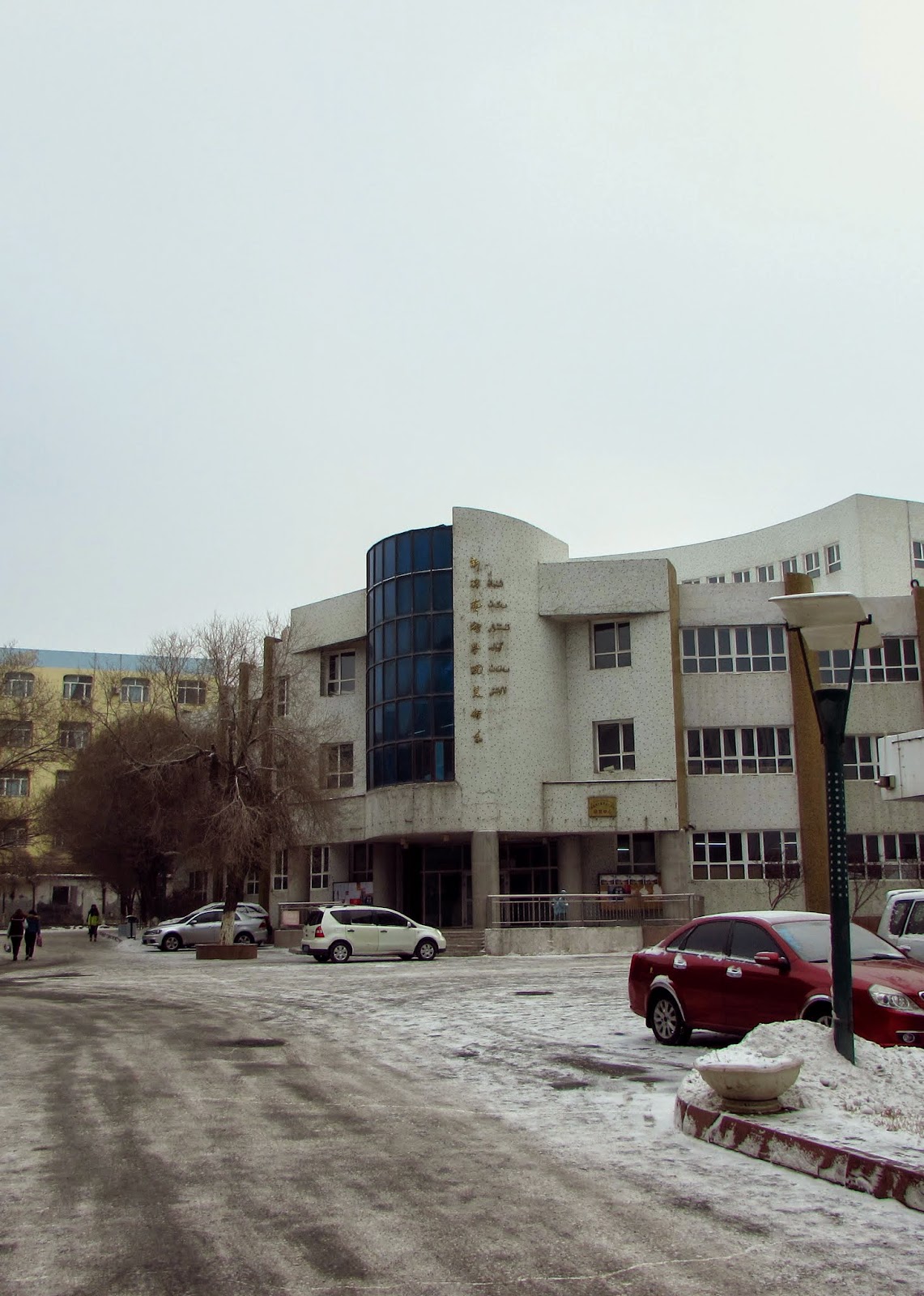
Snow on the ground at the Arts Institute
I left Urumqi about a month earlier than I had planned. It was a decision I grappled with for days. At first leaving felt premature, like I was giving up, like throwing in the towel because things got hard. Indeed, after the cushiness and glamour of life in Hong Kong, Urumqi was a stark contrast—gray dusty buildings against gray skies, freezing weather (coupled with a broken heater), a diet that consists primarily of starch and oily lamb dishes.


(Here's some listening for the rest of the post--first, a recording of a Uyghur music troupe touring in Urumqi; second, the Hami ghijak, a now-rarely played Uyghur instrument; and third, a muqam performance).

What struck me far beyond these superficial adjustments, however, was the unease that permeates the city and infects the populace. From my first day in Urumqi the divides that estrange the Han and Uyghur ethnic populations were tangible; for one, armed military police and tanks omnipresent at bus and train stations, shopping centers, mosques, and other major public areas were blatant reminders of past violence that has erupted as a result of tensions.

As a third-party observer, I was privy to the racism and xenophobia coming from both Hans and Uyghurs. I heard the rampant discrimination against Uyghurs, whether it was the Han taxi driver telling me that “Uyghurs are bad in the head,” implying that they have psychological predilection for being evil people, my Han acquaintances warning me that Uyghurs were backwards and to watch my belongings and guard my safety around Uyghurs, getting evicted from a predominantly Han nightclub for “dancing while Uyghur,” or hearing countless instances of police intimidation of Uyghurs, often arbitrarily through late-night “house calls.” Uyghur men are by default assumed to be terrorists, and are disallowed everything from the right to grow facial hair to privacy in their own homes in the name of counter-terrorism. Perhaps the most disturbing is what we don’t hear—the ongoing incidents outside of the city that don’t make the news, whispers and rumors of the clashes whose true catalysts and body counts we will likely never know.

Uyghur musicians lecture on muqam performance 
At the same time, it became increasingly clear that the Uyghurs around me were extremely disdainful of Han Chinese people, who they consider to be haram, or culturally and spiritually dirty (opposite of halal), because they are secular and eat pork. I found that Uyghurs tend to self-segregate, often only eating in restaurants run by Uyghurs (or at least Muslims) even when they travel to other cities. The Uyghurs I encountered didn’t consider themselves to have any Han friends (or even seem open to the possibility), and avoided speaking Mandarin except as necessary—even mocking the language among themselves. There’s even a term, mínkǎohàn (民考汉), that refers to Uyghurs who have studied at Han-run schools and speak Mandarin as their first language (sometimes better than, or instead of, Uyghur language)—they are often looked down upon by other Uyghurs, viewed as traitors to their own people, for selling out to their cultural oppressors.

It’s harder to fault the Uyghurs for this disdain—they are largely unwilling participants in the manipulation, and some argue diminution, of their own culture and customs. It’s not that Uyghur culture isn’t without flaws—for example, being a woman in Uyghur society is extremely oppressive in its own ways, including being valued based on one’s virginity, having to forfeit a career for a marriage (that almost inevitably will be marked by the husband’s marital dalliances), or hearing a lifetime of Uyghur idioms proclaiming the stupidity of the female sex. Beyond that, more conservative forms of Islam that prohibit music and dancing, for instance, are entering certain Uyghur communities in Xinjiang (much to the dismay of the musicians I spoke with).

Regardless, the current relationship between the Han and Uyghur populations, fraught with suspicion and mistrust, seems seriously flawed. “You could hardly find two more different groups of people,” a researcher told me. (This particular researcher speculates that at this rate Xinjiang could devolve into a Chechnya-like situation). I don’t think that the cultural differences between Hans and Uyghurs are actually the root of the problem; instead, I think that ignorant and rigid approaches toward multiculturalism (in particular an increasingly segregated education system) are supplanting efforts towards the mutual understanding that would lay the foundation for a success relationship.

It would be wrong to say that there is no future for Xinjiang Uyghurs musically; however, the traditional ways in which musicians have created music and thrived as artists certainly seem in jeopardy. Musical evolution that deviates from traditional modes of expression is a phenomenon arguably seen in all music cultures; the fact remains that artists will continue to be exposed to outside influences and new techniques and want to use them to create new, distinct modes of expression. In the case of Xinjiang, however, musical evolution is largely manipulated by overarching political motivations, and music does feel like it’s being used as a tool of mass distraction and pacification. To quote an earlier post:
This politically-informed gauge of what will be well-received, what’s appropriate, and what sends the “correct message” is shaping the Uyghur musical canon….It is degrading when an entire group of people is reduced to a few token songs and dances with funny hats.
Limitations on the content of songs and the size and number of Uyghur music concerts, as well as the dominance of state-sponsored platforms for musical performance (such as national “ethnic music” competitions and the annual nationally televised New Year’s Gala), artificially control the market for Uyghur music. (For instance, a Uyghur musician was severely punished for writing a song called “Mother Tongue,” which encouraged Uyghurs to learn their native language.) Illegal downloading of music de-incentivizes musicians from recording their work, and musicians scratch together a living working the wedding, club, and restaurant scene, which these days is hardly lucrative. Piracy and the difficulties of making it in the music industry are issues facing musicians in the States as well, the difference being that the government doesn’t control one’s ability to produce and consume music. Maybe one’s electro-grunge cyber-folk band that sings exclusively about promoting an agrarian society won’t gain traction with the mainstream public, but it won’t be because local officials are threatening the audience base or publishing dictates about permissible music tastes.

I write this post as a critical observer. I won't be so bold as to assert that I have clear-cut solutions (indeed, I would be skeptical of anyone claiming she did); however, I would argue that music doesn’t mask the unease in Xinjiang, but rather, upon close inspection, exposes the tensions pervading every aspect of society in the region. Perhaps the only suggestion I’ll make here is that in terms of the Han-Uyghur relationship, as with music, there should be a lot more listening and a lot less conducting.
A muqam ensemble

Saturday, October 18, 2014

First Quarterly Report: the spider was a metaphor

While the Watson Foundation does not require its Fellows to produce a research paper or findings from their year abroad, they do ask for quarterly reports in the form of a "long letter home." Mine is due today, and I thought I'd share it on the blog as well.

Dear Chris, Michelle, and Sneha,

Greetings from Urumqi, where at the moment I am sitting in a muqam performance class at the Xinjiang Arts Institute. Since the class is taught in the Uyghur language and thus I can’t really appreciate much more than the music, I’m also practicing writing the Uyghur alphabet in the hopes that picking up even a bit of the language will serve me during my time here.

I want to let you know that starting off my Watson in Hong Kong was truly a phenomenal experience, daunting though it was at the beginning. My first few weeks were overshadowed by trying to salvage my Wall Street Journal internship, only to find out that a variety of circumstances had made it impossible to do it at all this summer. (WSJ is happy to have me come back for the internship next summer/fall after my Watson year, which is my current plan.) So in my first week I was without a plan or established network.

On my first day of ‘funemployment’ I went to lunch by myself, and then decided I would walk uphill for as long as I could. Four hours later I was at the top of Victoria Peak, where the usually panoramic view was entirely obscured by thick mist. I resigned myself to a contemplative walk down the mountain, which went smoothly until I spotted a huge, face-sized spider dangling nonchalantly overhead. I am deathly afraid of long-legged spiders, and seeing this one I felt myself start to hyperventilate. I suddenly realized that Hong Kong is in a tropical environment, as is Indonesia, another of my Watson year destinations, and if I were going to survive this year I would have to accept the inevitability of spiders and learn to keep my cool even if they were hanging over my head. And I’m pretty sure the spider was a metaphor.

Later that day I walked into a random music school and signed up, sight unseen, for erhu lessons. My teacher ended up being a patient, talented, and generous young guy who, beyond teaching me how to play the instrument, shared his insight on attitudes toward music acquisition and preservation in China, and also invited me to join his Chinese orchestra. I performed with them for their Mid-Autumn Festival concert on erhu and as a solo violinist, playing a Cantonese opera piece and a violin showpiece.

One of the biggest things I took away from my time in Hong Kong was how interconnected the world is if you are open to it, and proactively seek out new connections and opportunities. I was warned by multiple previous Watson Fellows that this year would be lonely and miserable. Thus, expecting this would be the case, I made an events calendar, attending everything from an experimental jazz vocal concert to a dramatic reading of short fiction. I set up meetings with acquaintances of acquaintances, and then volunteered to help them out on their projects, no matter whether they seemed related to my own project or not.

And in fact, even those activities and connections that seemed so tangential ended up serving me in major ways I would never have foreseen. I worked closely with a composer and music critic who I met through a markets editor at WSJ. She invited me to a concert she was reviewing, at which time I discovered she had done her graduate studies with composer Lou Harrison and played gamelan on the recording of his work that inspired me to play it and write about him for my senior honors thesis. I volunteered to assist her in her work in any way I could, and soon was regularly going to concerts with her, traveling out to the island where she lives to help her with her work, and play her music (which draws on both ‘Western’ and Chinese influences).

Through the composer I met multiple wonderful people, including a Chinese linguist and professor at Hong Kong University who became my Mandarin teacher, mentor, and closest friend. He is a renaissance man with a self-declared ‘perfect’ memory and extremely strong democratic leanings despite having grown up and studied in northwest China. Discussing notions of cultural purity and propaganda in music with him in Mandarin helped my language skills, and made me think about the potential political and cultural implications of performing music from an “outside” culture or with ideological ties. “The thing with propaganda music is,” he said one time, “you may be singing ‘The Sun is Red,’ but the melody is really nice!”

I won’t go into the play-by-play of how I fell into all of these projects (I have recounted them on my blog) but here are some of the other highlights, in no particular order:
  • Coaching chamber music for a quintet of middle school boys
  • Becoming a classical music reviewer for TimeOut Hong Kong
  • Meeting John Thompson, a preeminent scholar and performer of Ming Dynasty guqin, on a far-flung island
  • Taking a few-day trip to Hangzhou, where quite by accident I met some of China’s top erhu players. I traveled with them to a rural village to meet their master teacher and join their family reunion, and then put on a recital of my own in a public square
  • Working at Hong Kong University’s Centre for Journalism and Media Studies a day or two each week in exchange for free housing at one of the Residential Colleges (I was named a “Junior Visiting Scholar” and a “good role model for the students”). I also joined HKU’s Gamelan Ensemble and played violin and erhu with HKU students
  • Spending multiple nights observing the Hong Kong democracy protests
Without realizing it, I had found a really wonderful niche in Hong Kong through the incredible relationships I had formed, and the prospect of leaving the place that was never supposed to be part of my Watson project became overwhelming. Many people, including my mother, suggested I not leave Hong Kong at all. But while there was so much more I could have done had I stayed longer, it felt important to stay faithful to my initial proposal, and that I would be cheating myself if I didn’t get out of my comfort zone.

And so, I arrived a little past midnight in Urumqi two weeks ago, a trial-by-fire start to my time in Xinjiang because my host had mixed up the date I was arriving and wouldn’t be returning to the city for two more days—which I discovered after the airport shut down at 2 am. Also, I had discovered a few days prior that my ATM card had expired and was subsisting on the cash I had borrowed from a friend. (I am still waiting on my new ATM card to arrive—fingers crossed it makes it!) I ended up getting in an unmarked car with a strange man and going to an airport hotel I could barely afford, where I started freaking out. Thankfully my host got in touch the next day and put me in contact with my first friends in Urumqi.

Things have steadily improved from that low point, although adjusting from a largely English-speaking, generally politically free island financial capital/culinary paradise to a frigid Uyhgur-speaking [SELF-CENSORING] that subsists on carbs and lamb has meant some significant culture shock. I am in my second week here, but only now starting to get my Xinjiang sea legs. I am planning to take a week long detour to Taiwan and Shanghai at the beginning of November to shadow Yo-Yo Ma’s Silk Road Ensemble for part of their Asia tour. I was only planning to spend two months in Xinjiang, but because it has taken me this time to settle in, and because I will be taking that week away, I am thinking that for this part of my year to be productive (in terms of learning erhu and ghijak, a Uyghur stringed instrument, and Uyghur and Mandarin languages) I should stay longer than I originally planned—possibly through some of the winter (so much for my plan to avoid freezing climates). I also am really enjoying learning erhu, and am vaguely entertaining the notion of going back to Hangzhou to find those erhu musicians and study with them—they offered to teach me after all! I am still wrangling with questions about how to prioritize my time, energy, and focus, so of course, if you have any insight I absolutely welcome it.

Okay, muqam class is out—time for Mandarin! Hope all is well with you.

Audrey

Loading
Scratching out my first Watson quarterly report

Thursday, October 09, 2014

The highest of tables and lowest of gutters

As I mentioned in a previous post, one of things that had been keeping me busy in Hong Kong was helping out at Hong Kong University’s Journalism and Media Studies Centre (JMSC). A close friend introduced me to Ying Chan, the director of the program, and I volunteered to help out with the JMSC’s work in any way I could. This has entailed everything from writing press releases for their website to writing the English language press kit for an Oscar Award-winning documentary filmmaker. In exchange for my work, Ying has hosted me at one of HKU’s residence halls for the last month and a half—an amazing and unbelievably generous arrangement given housing costs in Hong Kong. I had to laugh when I moved in, though—I would not have thought that so soon after graduation would I be living in student dorms, eating in a dining hall, and shuttling to campus in a school bus.

And then came High Table Dinner. For those of you who are unfamiliar, High Table Dinner is a tradition from the British education system in which students don robes and eat together at long tables overlooked by a ‘high table’ at the front of the hall where the distinguished faculty, masters, and tutors sit. (For those of you who are familiar with the Harry Potter dinners in the Great Hall—it’s the exact same concept, minus floating candles). I didn’t actually know any of this when Ying invited me to join the High Table Dinner at her residential college, but happily accepted the invitation, which instructed attendees to dress up or wear their national costume. Since draping myself with a large American flag or dressing up like the Lady of Liberty seemed fairly out of the question, I decided to wear someone else’s national costume and showed up wearing my newly acquired qipao (the high-necked ladies’ dress of China).

When I arrived at the Great Hall, I was given a long black robe (denoting post-graduates, distinguished faculty, and masters) and told to line up outside behind Ying and the other faculty while the students took their seats inside. Out of the blue I heard a trumpet fanfare, and the procession started to move. Suddenly I found myself filing down the middle aisle past lines of students who rose deferentially. I followed the procession all the way to the front, where I stood by a seat miraculously marked with my name. Little did I know that Ying had actually seated me at the High Table itself, seated among the distinguished faculty members. A few days earlier, one of my friends who lives at the residential college, a master’s student in music composition, had asked if I was going to ‘crash the High Table Dinner.’ As I stood at the front regarding the students in my regalia, I saw him rolling his eyes, gesturing with mock-indignation as I smirked from the front. Ying introduced all of the very accomplished college masters and tutors, and then introduced me.

“This is Audrey. She just graduated from Wellesley College in the United States. She has this very fantastic scholarship to travel to five countries and do nothing! Please talk to her so you can find out how to get scholarships.”


So, quite the introduction! But the meal went on and I found myself chatting amicably with the student organizers and a professor of architecture. Ying had asked me to play violin at the dinner, so after everyone was done eating, one of the tutors set up a music stand immediately in the middle of the students and I launched into my piece. I had asked a good friend about something short and pleasing to play for this gathering, and he had recommended I listen to Swallow Song (燕子/Kharlygash), a very melancholy love song about two lovers stuck between the border of Xinjiang and Kazakhstan. The lyrics are simple but adorable:

燕子啊
请你听我唱一支燕子歌
亲爱的请你听我说一说
燕子啊

燕子啊
不要忘了你的诺言变了心
我是你的你是我的
燕子啊


眉毛弯弯眼睛亮
脖子匀匀头发长
是我的姑娘
燕子啊

Swallow, ah…
Listen to me sing a swallow song.
Dear please, listen to me say a few words
Swallow, ah…

Swallow, ah…
Please do not forget your promise and change your heart.
I am yours, you are mine.
Swallow, ah…

Ah!
Eyebrows arched, eyes bright
Graceful neck, long hair
She is my girl.
Swallow, ah…


After watching this video I was completely sold (on both the song and the outfit) and transcribed it for violin. It seemed to go over very well with the High Table dinner crowd, and I was glad because afterward it gave tons of students the excuse to come talk with me. I felt so lucky—in that one night I made about twenty new friends. (A large group of them invited me to come out partying with them later that evening, another episode that again reminded me that I am no longer in college.) In particular I got to know an entire floor of girls in the residential college, with whom I relived my college experience through a couple of rounds of late night snacking, watching videos and movies, and gossiping about secret crushes. It was fun to witness their college experience now that I am on the other side of it and having such a radically different experience—I was just in their shoes a year ago, but now our concerns on a daily basis are so radically different from each other.

I scored a terrific gig writing classical music reviews for TimeOut Hong Kong, the city’s cultural and arts magazine and website, and so had the tremendous good fortune to get free tickets to the concerts I was planning to attend anyways, and then foist my opinions of them on the general public. What’s not to love!? I felt lucky to have taken a class at Wellesley partially devoted to writing concert, record, and book reviews, but nonetheless, before writing my first review for TimeOut, I felt pretty insecure to be judging musicians far more accomplished than myself. As I attended my first concert, however, I found that my reaction to the performance came easily—I didn't need to worry about coming up with the substance for a review. I reviewed three concerts in total before my time in Hong Kong came to a close, and the exercise of articulating what was successful and unsuccessful in others’ performances was really illuminating for me as a performer. I think in particular I came to appreciate how much of music performance is visual—the audience wants to see the players onstage interacting and engaging with each other and the music. It also became blatantly clear that even those concert-goers who aren’t music aficionados can appreciate the difference between players who are just playing the notes, and those who are so in touch with the music that they can inflect their own interpretations naturally.

My last days in Hong Kong were somewhat bizarre. There were some in the company of close friends, enjoying each other’s company for the last time in the foreseeable future. I went on a final junk boat trip, which was a beautiful day devoted to relishing island life. I had my final erhu lesson with my teacher, after which he took me to get lunch, erhu accessories, and my phone repaired. I had a last night in the dorm, spent watching a terribly acted Cantonese movie about prostitution in Hong Kong with my new friends from HKU. I went out with a few friends and their mothers for amazing food, and had a really nice outing with pals from the HKU gamelan ensemble I had joined for the last few weeks.


Hanging with the po'
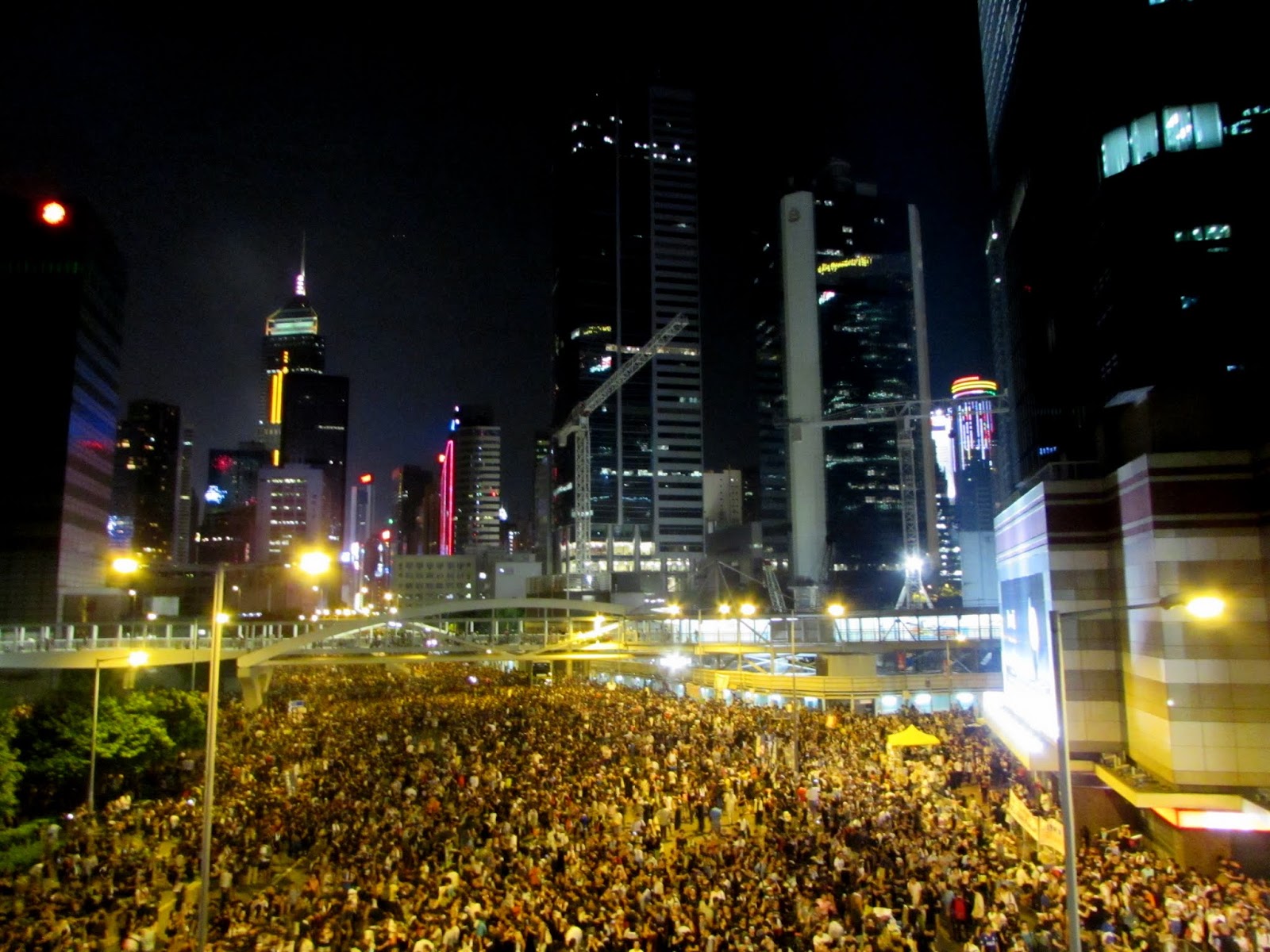
My evenings for almost the entire last week, however, were spent helping my former supervisor ABC News with their coverage of the pro-democracy student protests in Hong Kong that have been going on in full force for about a week and a half. (See my previous reaction post regarding the Hong Kong protests.) My ‘schedule’ for my last week in Hong Kong was spending the day working on various tasks or meeting up with friends and acquaintances, and then sometime between 8 and 10 pm meeting up with the news team, gearing up with cameras and gas masks, and then staying out to help them film segments and report live until 2 to 4 am. My role was that of ‘protest sherpa,’ guiding the team around the protest area (which I had visited before they arrived), providing real-time facts and rumors, carrying tons of bags, finding people for them to interview, and turning on my benign Texas charm to get past huge security blocks and police cordons. Rumors about what would happen were spreading like wildfire, and on the first night we went out (the day after police used tear gas) the reporter told us to treat the situation in the field like a warzone, prepping us on protocol in case of riots or violence. The atmosphere was tense, but for the first few nights the protests in Admiralty resembled a music festival more than a demonstration of civil disobedience: tons of couples, singing and cheering, street art everywhere, and people offering free food at every turn.

We kept anticipating some dark turn for the protests, whether that be students storming the Hong Kong Chief Executive's private home or police using any means necessary to clear the highways for National Day, which commemorates the founding of the People’s Republic of China. There was certainly was hostility, especially in the Mong Kok protest area, where paid thugs and/or disgruntled locals used their fists and not their words to address the protesters occupying the streets. But at least for now the prophecies of a second Tiananmen Square massacre have not been realized.

Staying up late every night and then trying to function during the day soon began to catch up with me. I started forgetting small and big things. My mind became occupied by the protests—I compulsively checked for reports and new developments, thinking something would change and I would miss it. I felt myself becoming consumed with worrying about the protesters, worrying about the future of Hong Kong, worrying about the fate of Chinese citizens on the whole. When I dragged some of my belongings I planned to send back home down the hill to the post office in torrential rain and found out my ATM card had expired, I basically lost it. I felt out of control of so many things. I confronted my sudden destitution, impending separation from my newly familiar and comfortable home and friendships in Hong Kong, and the fact that I could only observe the course of the protests. My good friend came to the rescue, fronting me cash and reminding me that I was cold, wet, hungry, and overtired.

My last day in Hong Kong was a string of get-togethers with close friends, after which I planned to go out for a last night of protest coverage. That evening Hong Kong's Chief Executive had publicly promised to clear the streets, and so tensions were high as rumors flew that there would be a massive crackdown. Before I went out I had one final ferry ride with a violin and erhu out to the island to see Alexis. She and I played erhu duets as well as her music, Mozart, and Arensky on violin and piano. We had intended to put on a final chamber music recital together with her former composition student, a cellist, but the cellist dropped out a few weeks prior, and then the protests took over my schedule, and the space we were going to use for our performance was already booked, so the odds were against us. Getting to see her and have a peaceful moment of music on an island so far removed from the Hong Kong hullaballoo was a godsend—and in many ways a final moment of calm before the storm.

Loading
After a lovely afternoon of playing Mozart, Arensky, Alrich, and erhu duets, a bittersweet farewell and "see you again" with Alexis on Lamma Island
After seeing Alexis, I got together with Paiyu (renaissance man, Chinese linguist and historian extraordinaire, and my very close friend and Mandarin teacher) for dinner. He has been incredibly generous with his time and energy helping me in Hong Kong, from editing a paper I am publishing to prescribing me traditional Chinese medicine. Like me, he has strong feelings about the student protests, but on that last night we agreed to not talk about politics. Instead, we talked about classical music and inane topics over dumplings while we watched a propagandized news report on the protests come on the TV, watching images of students and police shaking hands flit across the screen. We parted ways, and he urged me to stay safe that evening as I got in a cab heading toward the protests. “Send me a progress report on your paper!” he called. “See you again soon!”

I arrived at the protests, where the number of protesters was significantly less and the mood was palpably fearful. The ABC news team was prepared to stay out until 6 am to witness the protests, and so we got to work. I spotted student leader Joshua Wong in the crowd near Umbrella Man, the newly erected wooden sculpture holding aloft a yellow umbrella that is to the Hong Kong protests what the Lady of Liberty statue was to the Tiananmen Square protests. After a brief interview and a quick report for one of the news programs, we were in a holding pattern waiting for something to happen.


As the night dragged on I walked around the area, watching students drag trash cans to reinforce barricades meant to prevent attack by police buses and rogue taxi drivers. Others studied in an effort to keep up with the classes they had been skipping the entire week. Many were asleep, spread-eagle on the pavement or wrapped tightly in saran wrap or sleeping bags by highway medians.

At 4 am I found myself drifting off as well, curled up in the gutter next to a pile of cigarette butts and the drain. It didn’t seem to matter.


At 6 am the producer woke me up. It was time to leave, and for me to travel to Urumqi.

Wednesday, October 08, 2014

On the Hong Kong protests


I am long overdue on writing, and as I do so now it is a particularly climactic time, both for myself and for Hong Kong. Much has happened in the last few weeks that I would like to write about, but for the last week, the pro-democracy protests in Hong Kong have occupied my nearly every waking moment as well as mind space. I had heard discussion of the student movement and “Occupy Central” before this week, but as I watched the live stream of peaceful protesters bombarded with tear gas by heavily armed police, I became absorbed in the news and felt the same helplessness and vulnerability that I felt during the week of the Boston bombings. For the past six nights I have gone out to the protests with my former supervisor from ABC News’ Beijing bureau to help with ABC’s coverage of the unfolding events in Hong Kong. I have heard many perspectives—students who are fervent champions of democracy, mainland Chinese who believe Hong Kong citizens are selfish and should stop complaining, apathetic or unsympathetic locals who just want their everyday lives (and ability to use main road arteries) to return to normal…I believe that wanting to nominate and elect one’s own leaders in a free and fair election is not an unreasonable desire, although as someone pointed out to me today, Hong Kong for most of its history has not been democratic (though it has benefitted from having free markets).


A Hong Kong financier observing the protests told us that the protests are a symptom of the younger generation of Hong Kongers feeling trapped in society—the Hong Kongers don’t have high enough Mandarin language proficiency to work in mainland China, nor high enough English proficiency to work in the States, Canada, Australia, or Europe (and the available visas for these places are dwindling as well). In the meantime, the banking and finance jobs that have powered Hong Kong’s economy are going to mainland Chinese, who are also buying up real estate in Hong Kong and driving housing costs through the roof. In other words, the future the young generation of Hong Kongers face is bleak—even if they find a job in Hong Kong, they are unable to move out of their family homes or face twenty-five years of paying loans to just afford tiny apartments.


I feel strongly that people have the right to freely disseminate information and express their own views, and the massive censorship and information manipulation in both mainland China and Hong Kong that has accompanied these protests is extremely disturbing to me. Statistics show that online censorship of posts relating to the protests in Hong Kong is at an all-time high in mainland China—far exceeding censorship rates on even sensitive days such as the anniversary of the 1989 Tiananmen Square protests. Instagram has been blocked across mainland China in an effort to prevent images of the cell phone light vigils, the incredible street art, the huge police presence, and of course the tens of thousands gathered, from being seen and potentially emulated across the entire country. I want to hope (or be idealistic, a word that has been used to describe many of the student protesters) that such a public demonstration in Hong Kong, the final frontier of democracy in China, can fundamentally shake the Chinese government at its core and proliferate across China. I also realize how many factors are working against the protesters, not the least of which is the antipathy of much of the population of Hong Kong. Whether they are paid mafia thugs beating up students in Mong Kok or local shopkeepers incensed that their businesses are suffering because of the protests, perhaps an even greater strain on the protesters than the threat of a crackdown from Beijing is the pressure from fellow Hong Kongers to stop disrupting society. Rather than a large showdown between protesters and the People’s Liberation Army, this movement may die at the hands of Hong Kong citizens themselves, urging it out of existence.

I have tried to remain neutral as I assessed the situation this week; indeed, in the past few days I have both spent time sleeping amidst protesters on the occupied highway and standing among police behind the barricades and cordons. Nonetheless, my natural tendency is to sympathize with the pro-democracy protesters. By many measures American elections, with just two candidates who have achieved their status through corporate lobbying, can hardly be called free. Nonetheless, I find it very difficult to imagine a situation in which I could not feel any concern about the potential implications of infringement on my ability to express myself freely. As it becomes more and more absorbed into the Chinese system, the Hong Kong system is not becoming more independent, and I worry that the entire society will suffer in the long-term as it undergoes the process of assimilation.

I have absolutely fallen in love with Hong Kong. It is hands-down my favorite city I have visited, and I could imagine myself living here in the future. After this week, however, I worry that the future is not bright for Hong Kong, and that this city I have come to love is transforming into a shadow of its former self.


(posted late due to internet accessibility issues--follow-up on my last weeks in Hong Kong, and notes on my current locale, to come soon!)